Cheap Flights Australia
Cheap flights to Australia
Flying to Australia and travelling around you may need to know.
From the art and architecture of the Sydney Opera House to the mysteries of the Great Barrier Reef and the diverse plant and animal life of the Australian outback, the land Down Under is one of the most popular tourist destinations in the world.Australia, the smallest continent, is comprised of six provinces: South Australia (Adelaide), Western Australia (Perth), Queensland (Brisbane), New South Wales (Sydney), Victoria (Melbourne), and Tasmania (Hobart). Each has its own unique secrets to share, from the massive coastline, volcanic caves, and rainforests of Queensland, to the snowy mountains of New South Wales, the National Parks of Victoria, and the rocky ravines and beaches of Tasmania.
While long, sandy beaches and surfing are synonymous with Australia, there are plenty of other sports and activities to keep busy including fishing, diving, football, cricket, sailing, hiking, rugby and world-class shopping.
It is important to remember that seasons in Australia are the opposite of the northern hemisphere. December through February is summer while June through August is winter. Though the winter season is fairly mild, the southern mountain regions do receive snow.
Flying to Australia
Finding a flight to Australia should not be a problem. A number of airlines, including United Airlines, Lufthansa, British Airways, Air France, American Airlines, and South African Airways, offer reasonably priced flights. However, it’s always worth checking the available
Australia’s major airports are Sydney, Melbourne, and Brisbane. Sydney, one of the oldest continually operating commercial airports in the world, is Australia’s busiest airport and a major hub for Qantas Airlines, the country’s flagship carrier. Melbourne is the gateway for air travel to Victoria and convenient to the Great Ocean Road and Phillip Island. Brisbane is about 75 minutes from the Gold Coast, Australia’s leading destination, and 105 minutes from the Sunshine Coast.
Another unique way of getting to Australia is by boat. Consider combining your Australian adventure with a luxury cruise. November through February is the cruising season with ships from Disney Cruises, Royal Caribbean, Cunard Line, and Holland America docking in Australian ports.
Visas
Unless you are a citizen of Australia or New Zealand, you will need a valid visa to enter Australia. Plan ahead as it can take several months to receive the completed visa in the mail.
Vaccinations
Vaccinations are not necessary for travel to Australia unless you are coming from, or have visited, a yellow fever infected country within six days of arrival. Yellow fever, a viral disease transmitted by mosquitoes, is quarantinable in Australia. It is endemic in 32 African and 13 Central and South American countries. Contact your state or territory health department for information on the nearest yellow fever vaccination clinic if you will be travelling to any of these countries.
Getting around Australia
Australia is roughly the size of the United States comprising many diverse regions. Several options are available for travel within the country including trains, buses, ferries, car rental, and planes. Qantas, Virgin Blue, Jetstar, and Tiger Airways Australia all fly domestically.
Car rental is a nice option if you enjoy exploring on your own. An International Driver’s Permit (IDP) is not necessary as long as you have a valid UK driver’s license. However, if it is not a valid UK drivers license, an IDP is required. Keep in mind that driving is on the left-hand side of the road in Australia. License regulations and rules of the road can vary from state to state.
Time Zones
Australia has three time zones. Eastern Standard Time (EST) is observed in the eastern states, Central Standard Time (CST) in the Northern Territory and South Australia, and Western Standard Time (WST) in Western Australia. CST is half an hour behind EST and WST is two hours behind EST.
Daylight Saving
Clocks are wound one hour forward during Daylight Saving period. Time frames differ for various areas of the country. The beginning of October to the beginning of April marks Daylight Saving in New South Wales, South Australia, Tasmania, and Victoria. The Northern Territory, Western Australia and Queensland do not observe Daylight Saving period.
Need Visa Information
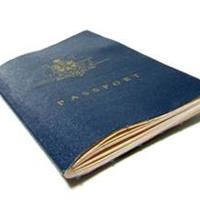
Need a visa for Australia
WHV's can ONLY be applied for; before arriving in Australia. Working Holiday Visa's* can only be granted before you arrive in Australia. For
details about applying visit Australia's official website here (www.immi.gov.au) or visit a Travel Agent or an Australian Embassy or Consulate
in the country you are in.
Need Superannuation Information
If your monthly wage is more than $A450, your employer must contribute an additional sum equal to 9.5% of your wage into a superannuation (pension) account for you. If you entered Australia on an eligible temporary resident visa you can, in most cases, access your contributions when you leave Australia, although the contributions will be taxed.
Jobs and Latest News

Latest news on jobs and travel around Australia
If you have any news regarding backpacker jobs around Australia please drop us a line and we will share it with fellow travellers. Happy travelling!!!!