Need Visa Information
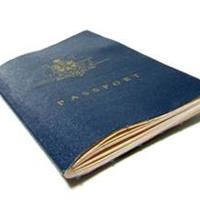
Need a visa for Australia
WHV's can ONLY be applied for; before arriving in Australia. Working Holiday Visa's* can only be granted before you arrive in Australia. For
details about applying visit Australia's official website here (www.immi.gov.au) or visit a Travel Agent or an Australian Embassy or Consulate
in the country you are in.
Need Superannuation Information
If your monthly wage is more than $A450, your employer must contribute an additional sum equal to 9.5% of your wage into a superannuation (pension) account for you. If you entered Australia on an eligible temporary resident visa you can, in most cases, access your contributions when you leave Australia, although the contributions will be taxed.
Backpackers Mt Augustus
| Mount Augustus WORLD'S BIGGEST ROCK |
Mount Augustus, or Burringurrah as it is known by the local Wadjari Aboriginal people, is about 850 kilometres from Perth and midway between the Great Northern and North West Coastal highways. One of the most spectacular solitary peaks in the world, it rises 717 metres above a stony, red sandplain of arid shrubland—dominated by wattles, cassias and eremophilas—and is clearly visible from the air for more than 160 kilometres. The rock itself, which culminates in a small peak on a plateau, is about eight kilometres long and covers an area of 4,795 hectares. At about twice the size of Uluru [Ayers Rock] it is the biggest 'rock' in the world. The Geology The rocks of Mount Augustus are from the upper Proterozoic age; they were deposited on an ancient sea floor as sand and boulders some 1,000 million years ago. These deposits consolidated to form sandstone and conglomerate strata, which eventually, with movement in the Earth's crust, folded and uplifted. Sandstone and conglomerate cover a wide area, including Mt Phillip, 35 kilometres to the west-south-west. The granite rock that lies beneath Mount Augustus is 1,650 million years old. Making it not only twice the size of Uluru, but considerably older. Plants and Animals Drainage lines from the rock seep beneath the surrounding sands to feed groves of white-barked river gums. Elsewhere mulga, myall, gidgee and other wattles are dispersed across the red sandplain. Here honeyeaters, babblers and galahs forage for food. Nearby emus seek fruits, and bustards snatch insects and small reptiles from the ground. Bungarras (goannas) and red kangaroos are common on the plain, while euros and birds of prey are found closer to the rock. At Cattle Pool on the Lyons River, a tributary of the Gascoyne, permanent pools attract waterbirds such as black cormorants, swans and ducks. In the trees are corellas and blue-winged kookaburras. Aboriginal History Historically, the Aboriginal people who inhabited the area around Mount Augustus were known as the Wadjari. In times of plenty, the Wadjari people would roam over a wide area of the Gascoyne. In times of drought, however, the Wadjari would return to areas where water was available, such as the natural springs along the base of Mount Augustus. Aboriginal occupation is evident by the engravings on rock walls at Mundee, Ooramboo and Beedoboondu visitor sites, and by numerous stone tools discovered in these areas. There are at least three Dreaming stories for Mount Augustus. Although each differs slightly in detail, the basic thread of the story remains the same. Probably the best-known story is one about a boy called Burringurrah, who was undergoing his initiation into manhood. 'The rigours of initiation so distressed Burringurrah that he ran away. In doing so, he transgressed the Aboriginal tribal law and under the law he had to be punished. Tribesmen pursued the boy, finally catching up with him and spearing him in the upper right leg [spearing still remains the main form of punishment under tribal law]. Burringurrah fell to the ground; the spear head broke from its shaft and protruded from his leg. The boy tried to crawl away, but the women beat him with their mulgurrahs [fighting sticks]. Burringurrah collapsed and died, lying on his belly with his left leg bent up beside his body.' As you look at Mount Augustus you can see the shape of a body, with the stump of the spear in the leg. The geological fracture lines at the western end of the mount indicate the wounds inflicted by the mulgurrah. The spear stump is the small peak called Edney's Lookout, at the eastern end of the mount. THINGS TO SEE AND DO
Access:Mount Augustus is 490 kilometres from Carnarvon via Gascoyne Junction and 360 kilometres from Meekatharra. Roads are gravel, but suitable for conventional vehicles most of the year.However, roads may be closed or substantially damaged after heavy rain. Seek advice from the local Shires. Carry ample fuel, water and supplies to cope with all possible occurrences. Accommodation and Camping: No camping or open fires are permitted within the National Park or on Mount Augustus Station pastoral lease. Accommodation, powered caravan sites, camping facilities, meals, fuel and water are available at Mount Augustus Outback Tourist Resort, phone (08) 9943 0527 and Cobra Station, (08) 9943 0565. |